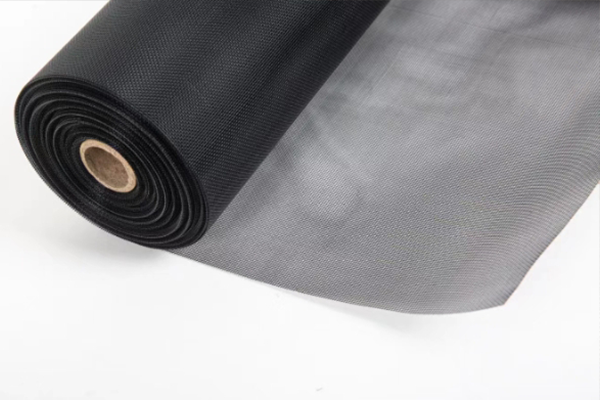

ProductsDetails
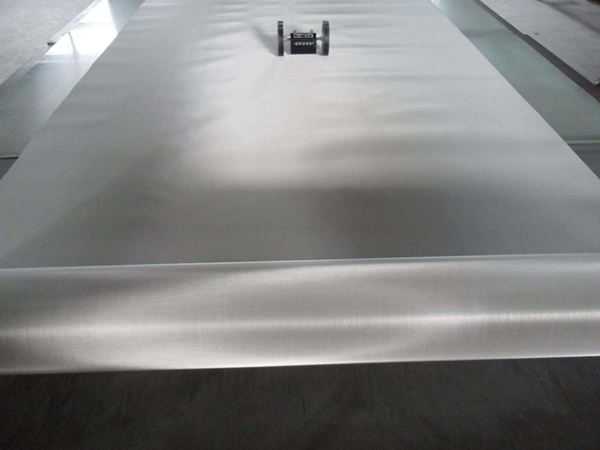
Stainless steel filter screen
1、 Basic Attributes and Craftsmanship
Stainless steel filter mesh is a mesh filter material mainly made of stainless steel wire, and commonly used stainless steel materials include 304, 316, etc. Its production processes are diverse, commonly including weaving, stamping, etching, etc. The weaving process forms a mesh structure by interweaving warp and weft steel wires, with uniform mesh holes and determined elasticity; Stamping technology is the use of molds to punch regular holes in stainless steel plates, suitable for making larger aperture filters; The etching process can accurately process fine mesh holes on the surface of stainless steel, meeting the requirements of precision and suitable filtration. Filter screens made by different processes have their own characteristics in structure and performance, and can adapt to different filtration scenarios.
2、 Product Features
Good corrosion resistance (based on actual reports): Stainless steel material itself has definite corrosion resistance, especially 316 material, which can reduce the damage caused by corrosion and maintain the stability of filtration performance when used in acidic, alkaline and humid environments. It is suitable for filtration operations in various complex environments.
High strength: Stainless steel wire has good mechanical strength, and the filter mesh made of it can withstand certain pressure and impact forces. It is not easy to deform during the filtration process, and can maintain the stability of the mesh, confirming the consistency of the filtration effect.
Strong heat resistance: In high temperature environments, stainless steel filter screens are not prone to softening, aging, and other phenomena, and can maintain normal filtration function. They can be used in high-temperature liquid and gas filtration scenarios.
Easy to clean: The stainless steel filter screen with a smooth surface can be cleaned by water washing, acid washing, and other methods after use to remove impurities attached to the mesh surface, making it easy to reuse and reducing usage costs to a certain extent.
3、 Common specifications
Material type:
304 stainless steel: suitable for general room temperature and neutral environment filtration, with good corrosion resistance (based on actual reports) and cost-effectiveness, it is a commonly used material.
316 stainless steel: Adding molybdenum element on the basis of 304, it has strong corrosion resistance (based on actual reports), especially suitable for environments containing chloride ions, such as seawater and filtration in the chemical industry.
Mesh size: Wide range, ranging from a few micrometers to a few centimeters. Micro porous filter screens (such as 1-100 microns) are suitable for excellent filtration, such as liquid filtration in the pharmaceutical and electronic industries; Large pore filters (such as 1-10 millimeters) are used for coarse filtration, such as removing large particle impurities from liquids.
Mesh thickness: Depending on the filtration pressure and strength requirements, the thickness is usually between 0.1mm-2mm. Thicker mesh can withstand high pressure and is suitable for high-pressure filtration scenarios.
Size specifications: The length and width of the mesh can be customized according to actual needs, commonly including 50cm × 50cm, 100cm × 100cm, etc. It can also be processed into special shapes such as circular and elliptical to adapt to different filtering equipment.
4、 Applicable scenarios
Chemical industry: used for filtering chemical raw materials, removing solid impurities, and protecting the purity of chemical products; In the filtration of acidic and alkaline solutions, 316 stainless steel filter mesh can resist corrosion, confirming the stability of the filtration process.
Food and beverage industry: can be used for filtering fruit juice, beverages, and alcoholic beverages, removing impurities such as pulp residue and sediment, and improving product clarity; In the filtration of edible oil, impurities and residues in the oil can be filtered out to protect the quality of the edible oil.
Water treatment industry: In the process of tap water treatment and sewage treatment, stainless steel filter mesh can be used as a filtering material in the pretreatment stage to remove larger particle impurities such as sediment and suspended solids in the water, reducing the burden on subsequent filtration equipment.
Pharmaceutical industry: used for filtering medicinal liquids, removing insoluble particles from the liquid, protecting the purity and safety of the liquid; It can also play an important role in the filtration of cleaning water for diagnostic and therapeutic instruments.
Industrial production: In mechanical processing, it can be used for filtering coolant, recovering metal debris, and extending the service life of coolant; In the painting industry, it is used for filtering paints and coatings, removing particle impurities, and protecting the smoothness of the painted surface.
 Recommended News
-
Technical guide for installation of spray coated stainless steel mosquito nets
2025-07-20 08:51:42
-
Why does stainless steel mosquito net deform shortly after use
2025-07-20 08:49:17
-
Is it difficult to clean stainless steel mosquito nets?
2025-07-20 08:42:16
-
Key points for selecting materials for welded mesh
2025-07-20 08:39:04
-
Unveiling the Manufacturing Process of Welded Mesh: From Material Selection to Welding
2025-07-20 08:38:03
Contact us
—— Contact:Mr. Hu
—— Tel:+8615832823281
—— Email:tuochenmesh@foxmail.com
—— Url:http://www.anyaochenwiremesh.com
—— Address:No. 9 Lituan Village, Anping Town, Anping County, Hengshui City, Hebei Province