
ProductsDetails
stainless steel mesh
1、 Basic Attributes and Craftsmanship
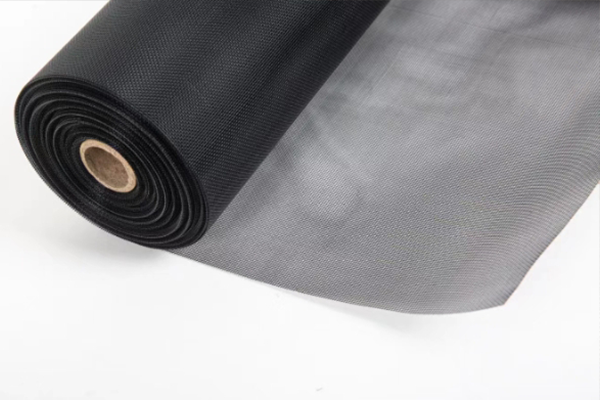
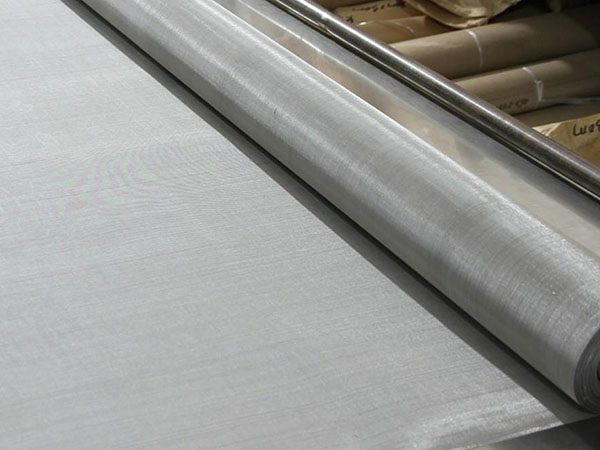
Stainless steel mesh is a mesh product made from stainless steel wire or stainless steel plate, processed through weaving, welding, stamping and other processes. The commonly used stainless steel materials include 304, 316, 304L, etc. Different materials have differences in corrosion resistance (based on actual reports), strength, etc., which can meet the needs of different scenarios. The weaving process involves interweaving warp and weft threads to form a mesh surface, while the welding process involves welding and fixing steel wires at intersections. The stamping process involves punching mesh holes directly into the sheet metal, resulting in a variety of structural forms for stainless steel mesh.
2、 Product Features
Good corrosion resistance (based on actual reports): Stainless steel material itself contains elements such as chromium and nickel, which can form an oxide film on the surface to resist the erosion of air, moisture, and some corrosive substances. 316 material is stable in acidic, alkaline, and high salt environments due to the addition of molybdenum, making it suitable for use in complex environments.
Moderate strength and toughness: It has definite tensile and compressive strength, is not easily deformed or broken in conventional use, can maintain the structural stability of the mesh, and can withstand certain external impacts.
Strong high temperature resistance (based on actual reports): At higher temperatures, stainless steel mesh is not easily softened or aged, and can maintain its physical properties. It is suitable for high-temperature working conditions, such as protection in industrial furnaces and filtration of high-temperature liquids.
Easy to clean and reusable: The surface is relatively smooth, and impurities are not easily attached. After use, it can be cleaned by washing or wiping, and can continue to be used after cleaning, which reduces the cost of use to a certain extent.
Diverse application scenarios: By adjusting materials, processes, and specifications, stainless steel mesh can meet various needs such as filtration, protection, screening, and decoration, and can play a role in multiple industries.
3、 Common specifications
Material type:
304 stainless steel mesh: suitable for normal temperature and neutral environment, such as daily water filtration, food processing assistance, etc., with a wide range of applications.
316 stainless steel mesh: corrosion resistance (based on actual reports) is better than 304, suitable for scenarios with corrosive media such as chemical, marine, and diagnosis and treatment.
304L stainless steel mesh: With low carbon content and good welding performance, it is suitable for scenarios that require welding processing.
Structure and process specifications:
Weaving: including plain weave, diagonal weave and other weaving methods, with uniform mesh and good breathability, commonly used for filtration and screening. The plain weave mesh has a smooth surface, while the diagonal weave has relatively high strength.
Welding type: The welding points are firm, the structure is stable, and the mesh size can be flexibly adjusted, suitable for protection, isolation and other scenarios.
Stamping type: The mesh shapes are diverse (such as circular and square), with good overall strength, suitable for heavy-duty protection, support, etc.
Mesh size and dimensions:
Mesh size: ranging from a few micrometers to tens of centimeters. Micro porous mesh can be used for excellent filtration, such as fine filtration in the electronics industry; Large pore mesh is suitable for protection, ventilation and other scenarios.
Mesh size: The width is usually 0.5m-3m, and the length is 1m-100m. It can be customized according to needs and can also be processed into special shapes such as cylindrical or curved shapes, suitable for different equipment and venues.
4、 Applicable scenarios
Filtration and Purification:
Industrial filtration: used in industries such as chemical, petroleum, and pharmaceutical to filter impurities from liquids or gases, such as removing particles from pharmaceuticals and suspended solids from industrial wastewater.
Water treatment: used in the filtration process of tap water purification and sewage treatment to intercept substances such as sediment and algae in water and improve water quality.
Air filtration: As a filter component of an air purifier, it filters dust and particulate matter from the air.
Protection and isolation:
Equipment protection: As a protective cover for machinery and equipment, it prevents personnel from coming into contact with moving parts and blocks foreign objects from entering the interior of the equipment, such as the protective mesh of machine tools and fans.
Site isolation: Use isolation nets in factory areas, residential areas, parks, and other places to divide different areas and ensure smooth operation, such as fences and guardrails.
Breeding protection: A fence used for aquaculture and poultry farming to prevent breeding objects from escaping and natural enemies from invading, such as fish pond fences and chicken coop guardrails.
Screening and Sorting:
Mining screening: In ore processing, different particle sizes of ore are separated to screen out ore materials that meet the requirements.
Grain sorting: used to screen impurities and particles of different sizes in grains and beans to improve grain purity.
Decoration and others:
Decoration industry: It can be used as indoor and outdoor decoration materials, such as partitions, ceilings, wall decorations, etc., to create trustworthy visual effects through different mesh designs.
Support and fixation: used as a support mesh in industries such as construction and chemical engineering, such as reinforcement mesh in concrete pouring and catalyst carrier mesh.
 Recommended News
-
Technical guide for installation of spray coated stainless steel mosquito nets
2025-07-20 08:51:42
-
Why does stainless steel mosquito net deform shortly after use
2025-07-20 08:49:17
-
Is it difficult to clean stainless steel mosquito nets?
2025-07-20 08:42:16
-
Key points for selecting materials for welded mesh
2025-07-20 08:39:04
-
Unveiling the Manufacturing Process of Welded Mesh: From Material Selection to Welding
2025-07-20 08:38:03
Contact us
—— Contact:Mr. Hu
—— Tel:+8615832823281
—— Email:tuochenmesh@foxmail.com
—— Url:http://www.anyaochenwiremesh.com
—— Address:No. 9 Lituan Village, Anping Town, Anping County, Hengshui City, Hebei Province