
ProductsDetails
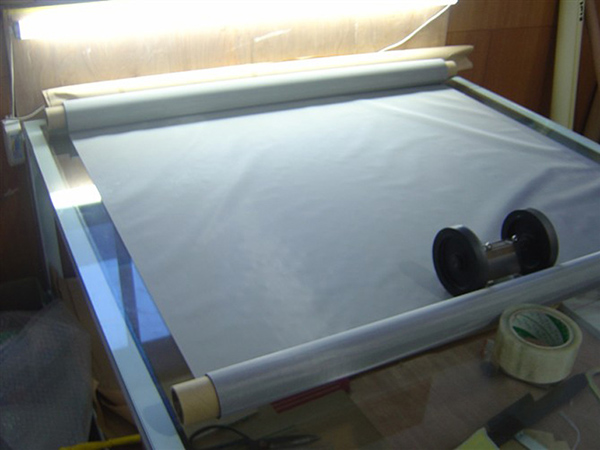
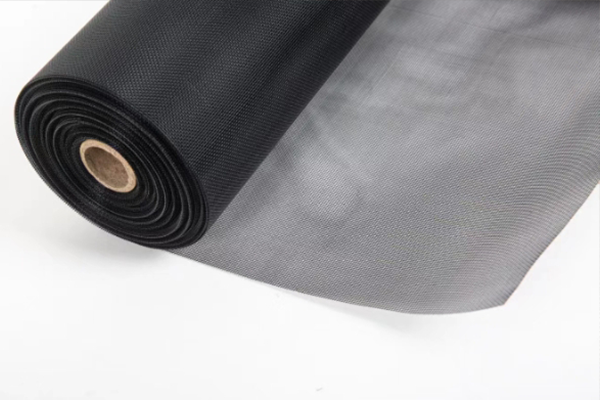
High mesh stainless steel mesh
1、 Basic Attributes and Craftsmanship
High mesh stainless steel mesh commonly refers to stainless steel mesh products with a mesh size of over 100 mesh, made from finer stainless steel wires such as 304 and 316, using meticulous weaving techniques. The 'mesh' here refers to the number of mesh holes per inch of length, with higher mesh numbers resulting in finer mesh holes. The weaving process requires high precision and operation of the equipment. It is necessary to use a one-to-one fine weaving machine to weave the finer steel wires in a staggered manner, confirming that the mesh holes are uniform and the size is stable, avoiding situations such as missing or incorrect weaving, in order to meet the basic requirements of excellent filtration.
2、 Product Features
The mesh size is fine and uniform: the high mesh characteristic makes its mesh size small, usually below 150 microns (such as 200 mesh corresponding to a mesh size of about 74 microns), and the mesh distribution is uniform, which can effectively intercept small particles and impurities, suitable for filtering scenarios with appropriate accuracy.
Stable filtration accuracy: With a fine and regular mesh structure, it can stably intercept particles of specific sizes, and the filtration effect is consistent, which can meet the high filtration requirements for medium purity.
Material performance adaptation: When using 304 material, it can maintain stable filtering performance in neutral environments at room temperature; 316 material, due to its strong corrosion resistance (based on actual reports), is suitable for excellent filtration scenarios containing corrosive media such as acid and alkali, salt spray, etc.
Strength and toughness balance: Although fine steel wire is used for weaving, the mesh still has a certain tensile strength and toughness through reasonable weaving process, and is not easily damaged under normal filtration pressure, which can maintain the integrity of the mesh.
Controllable surface condition: can be treated as a glossy or matte surface according to needs, with high surface smoothness, reducing impurity adhesion, easy to clean, and can be reused after cleaning, extending the service life to a certain extent.
3、 Common specifications
Material type:
304 high mesh stainless steel mesh: suitable for filtering neutral liquids or gases at room temperature in industries such as food and medicine, such as liquid medicine filtration and excellent filtration of drinking water.
316 high mesh stainless steel mesh: suitable for excellent filtration in corrosive environments such as chemical and electroplating, such as acid and alkali solution filtration, chlorine containing liquid filtration, etc.
Mesh size and mesh size:
The commonly used mesh size range is from 100 mesh to 635 mesh, with corresponding mesh sizes decreasing from 150 microns to around 20 microns. For example, a 100 mesh mesh is about 150 microns, a 200 mesh is about 74 microns, a 400 mesh is about 38 microns, and a 635 mesh is about 20 microns.
The selection of mesh size should be combined with the particle size of impurities in the filtering medium to confirm that it can effectively intercept target impurities, while avoiding excessive filtration resistance caused by a high mesh size.
Wire diameter and size:
The wire diameter is usually between 0.02mm-0.1mm, which decreases with increasing mesh size to protect the excellent filtering area of the mesh.
The width of the mesh is usually 0.3m-1.2m, and the length is 1m-30m. It can be customized according to the size of the filtering equipment, and can also be processed into circular, cylindrical, and other shapes to adapt to filter cartridges, filters, and other devices.
4、 Applicable scenarios
Pharmaceutical industry:
Used for terminal filtration or pretreatment of medicinal liquids, removing small particles and insoluble impurities from the liquid, protecting the purity of the liquid, and complying with pharmaceutical production standards.
As a filtering component for the cleaning water of diagnostic and therapeutic instruments, it filters out particles in the water to avoid instrument contamination.
Electronics and Fine Manufacturing:
The filtration of high-purity water in the electronics industry, such as ultrapure water filtration in semiconductor production processes, removes trace impurities and colloidal particles from water.
The filtration of detailed component cleaning solution prevents small particles from adhering to the surface of the components and affecting product accuracy.
Food and Beverage:
Excellent filtration of premium beverages such as wine and juice removes tiny fruit pulp particles and microbial debris from the liquid, enhancing the clarity and taste of the beverage.
The scale filtration of edible oil filters out fine impurities and gum in the oil, extending the shelf life of the oil.
Chemical and Environmental Protection:
In excellent chemical engineering, catalyst filtration and solvent purification are used to remove small solid particles and protect the stability of chemical reactions.
Excellent filtration of industrial waste gas in the environmental protection industry, interception of aerosol particles, and reduction of pollutant emissions.
5、 Precautions for use
When selecting, it is necessary to accurately evaluate the characteristics of the filter medium (such as corrosiveness, temperature, viscosity) and the required filtration accuracy, match the appropriate material and mesh size, and avoid affecting the filtration effect or causing damage to the mesh body due to improper selection.
During installation, handle with care to avoid pulling or folding the mesh to prevent deformation of the mesh or breakage of the wire diameter; The sealing with the filtering equipment should be tight to prevent leakage of unfiltered media.
During the filtration process, it is necessary to control the filtration pressure and flow rate to avoid excessive pressure causing damage to the mesh body and excessive flow rate affecting the filtration accuracy.
When cleaning, a gentle method should be used, such as rinsing with low-pressure water or soaking in a suitable solvent before rinsing. Hard brushes or high-pressure water flow should be avoided to prevent damage to the mesh surface; If the mesh is severely blocked and cannot be cleaned, it should be replaced in a timely manner.
When storing, it is necessary to avoid damp and corrosive environments. It can be rolled up or placed flat in a dry and ventilated place to prevent the mesh from rusting or deforming under pressure.
 Recommended News
-
Technical guide for installation of spray coated stainless steel mosquito nets
2025-07-20 08:51:42
-
Why does stainless steel mosquito net deform shortly after use
2025-07-20 08:49:17
-
Is it difficult to clean stainless steel mosquito nets?
2025-07-20 08:42:16
-
Key points for selecting materials for welded mesh
2025-07-20 08:39:04
-
Unveiling the Manufacturing Process of Welded Mesh: From Material Selection to Welding
2025-07-20 08:38:03
Contact us
—— Contact:Mr. Hu
—— Tel:+8615832823281
—— Email:tuochenmesh@foxmail.com
—— Url:http://www.anyaochenwiremesh.com
—— Address:No. 9 Lituan Village, Anping Town, Anping County, Hengshui City, Hebei Province